
Nexus Markerless runs optical and markerless capture in the same session, inside Vicon's existing ecosystem, with real-time visualization, seamless force plate integration, and full transparency into how every output is generated. This guide sets out what's validated today, what's still in progress, and where the technology fits, so your team has what it needs before a conversation with sales.
How It Works: Transparent By Design
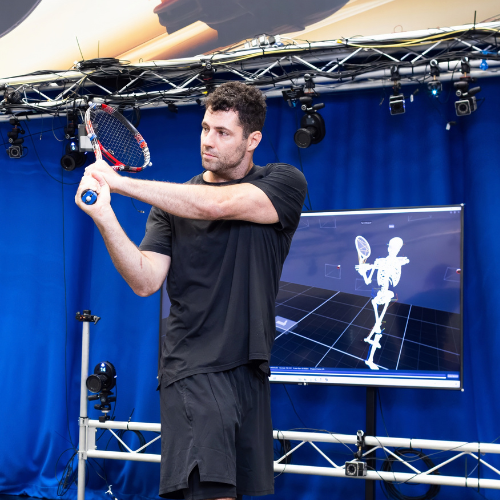
Nexus Markerless tracks 27 keypoints directly from camera images, 17 matching the COCO standard (major joints, ears, eyes, nose) plus 10 more on the hands and feet. Every one of these points is visible, defined, and drawn from what the cameras actually see.
This distinction matters: a keypoint is identified directly in the camera image. An inference point is calculated from those keypoints rather than seen. via a biomechanical model, or in some competitor systems, a separate machine-learning layer. Some markerless vendors fold a large number of inferred points into their headline keypoint count without disclosing which is which. Nexus Markerless doesn't: what you see is what the cameras saw, and it runs locally, inside the same system as the rest of your Vicon setup, not stitched together from separate vendors.
Validation: Where We Stand Today
Internal validation is ongoing across capture volume sizes, occlusion, and clothing conditions. Three white papers are targeted for publication: a markerless-versus-marker-based comparison, a camera setup sensitivity study, and an RGB-versus-monochrome camera comparison. A customer-facing validation framework is also in development, so labs will be able to run their own marker-versus-markerless comparison directly inside Nexus.
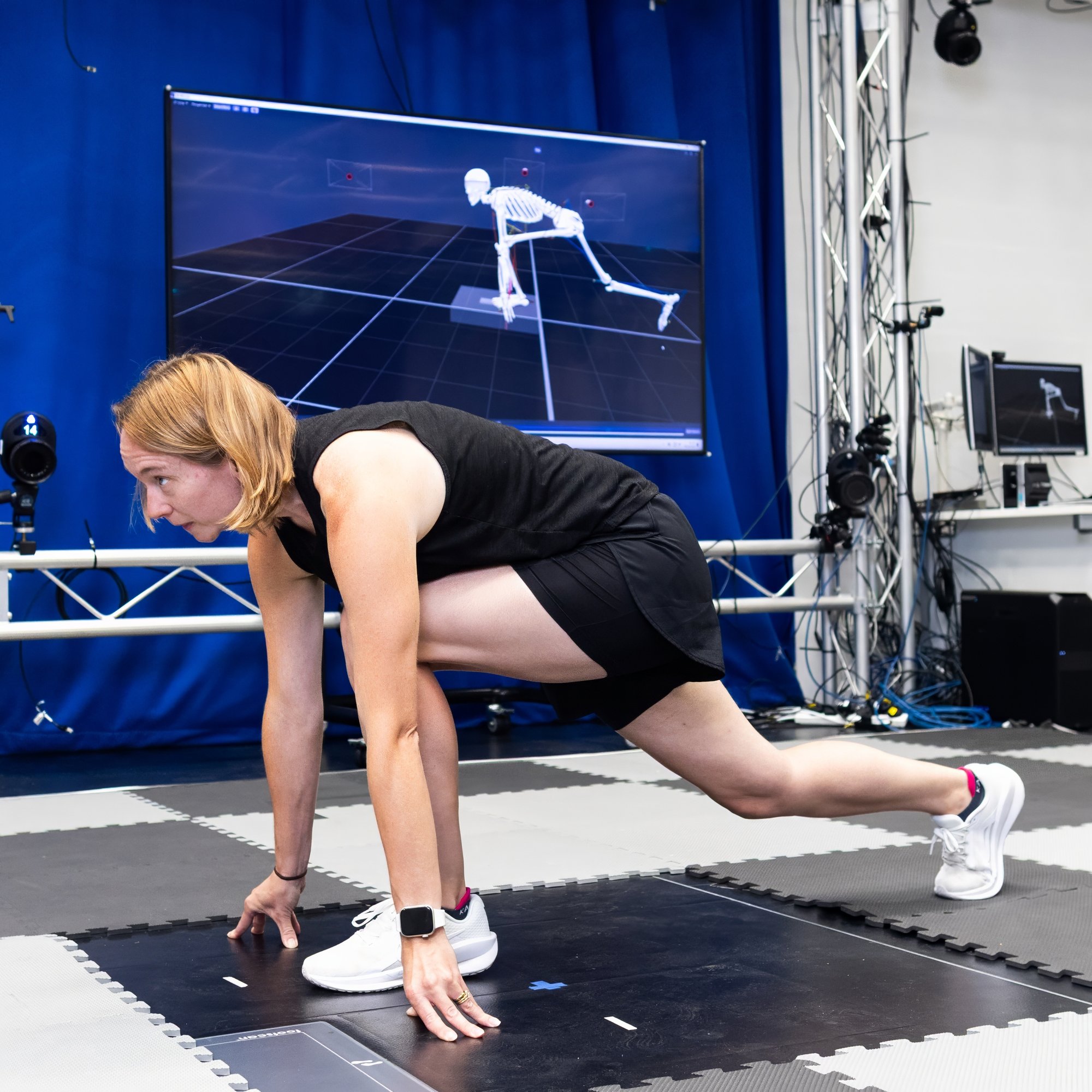
Accuracy is disclosed by anatomical plane rather than as a single number. Sagittal-plane correlation is strong today; coronal and transverse planes are still maturing.
Accuracy, Fidelity & Where We're Heading
.png "Markerless Model (3)")
Degrees of freedom (DOF)
The knee and ankle are currently modeled at 1 DOF, a disclosed limitation while the model is refined. 3 DOF modeling is on the roadmap.
T-pose calibration
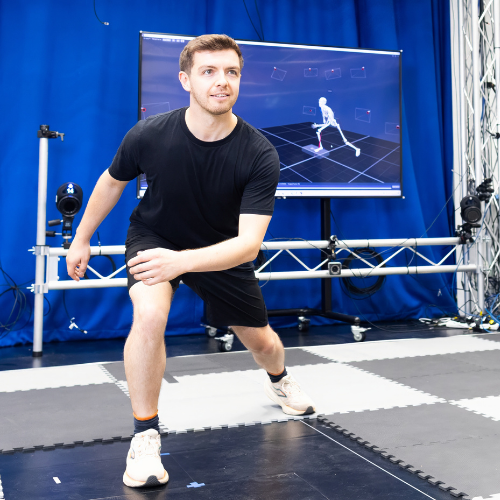
The system currently applies one global scale factor per subject. Individualized segment scaling is a roadmap item.
.png "Markerless Model (2)")
Occlusion
Internal validation is ongoing across capture volume sizes, occlusion, and clothing conditions, as part of the broader accuracy programme.
Time Saving: The Honest Numbers
The figures below are Vicon's internal reference range, not a substitute for your own team's numbers, use them to sense-check, not as a headline claim.
Marker-Based (Nexus 2) |
Nexus Markerless |
|
Subject prep & setup (per subject) |
Up to 30 minutes - trained operator placing markers at anatomical landmarks. | Single T-pose calibration - directionally a matter of seconds, no marker placement. |
| Post-processing (per trial, to a usable output) | 10 minutes best case, up to 90 minutes typical. | Anecdotally “seconds” to Nexus Reports in a live demo context. |
Marker-based figures are Vicon's internal reference data. The 10-minute end of the post-processing range assumes an out-of-the-box model and a camera setup optimized to minimize gaps and occlusions; most real-world sessions land closer to the 90-minute end. Nexus Markerless figures are directional — based on a live demo context, not yet an independently benchmarked figure. A validated Nexus Markerless post-processing benchmark, matched against the marker-based range, is in progress.
Where Markerless Fits: Who's It For?
Research Capture
Exploratory movement studies, and any context where a lab needs to defend a transparent, disclosed model to a reviewer.
Sports Quick Assessment
Fast screening and movement analysis. Not positioned for return-to-play or clearance decisions.
Teaching
Real-time, marker-free capture that lets students see movement analysis immediately, without marker-based setup time or cost.
Hybrid Capture
The Core Intended Use
Run marker-based and markerless together in the same trial - markerless for speed and accessibility, marker-based for anything requiring certified accuracy. Nexus Markerless is not a replacement for marker-based capture where certified accuracy is required, it's built to run alongside it.
The Clinical Boundary
No markerless system on the market is diagnostic-grade today, ours included. Nexus Markerless is built to run alongside marker-based capture, not replace it: markerless picks up screening, progress tracking, and patient engagement, while certified marker-based data remains the standard for anything diagnostic.